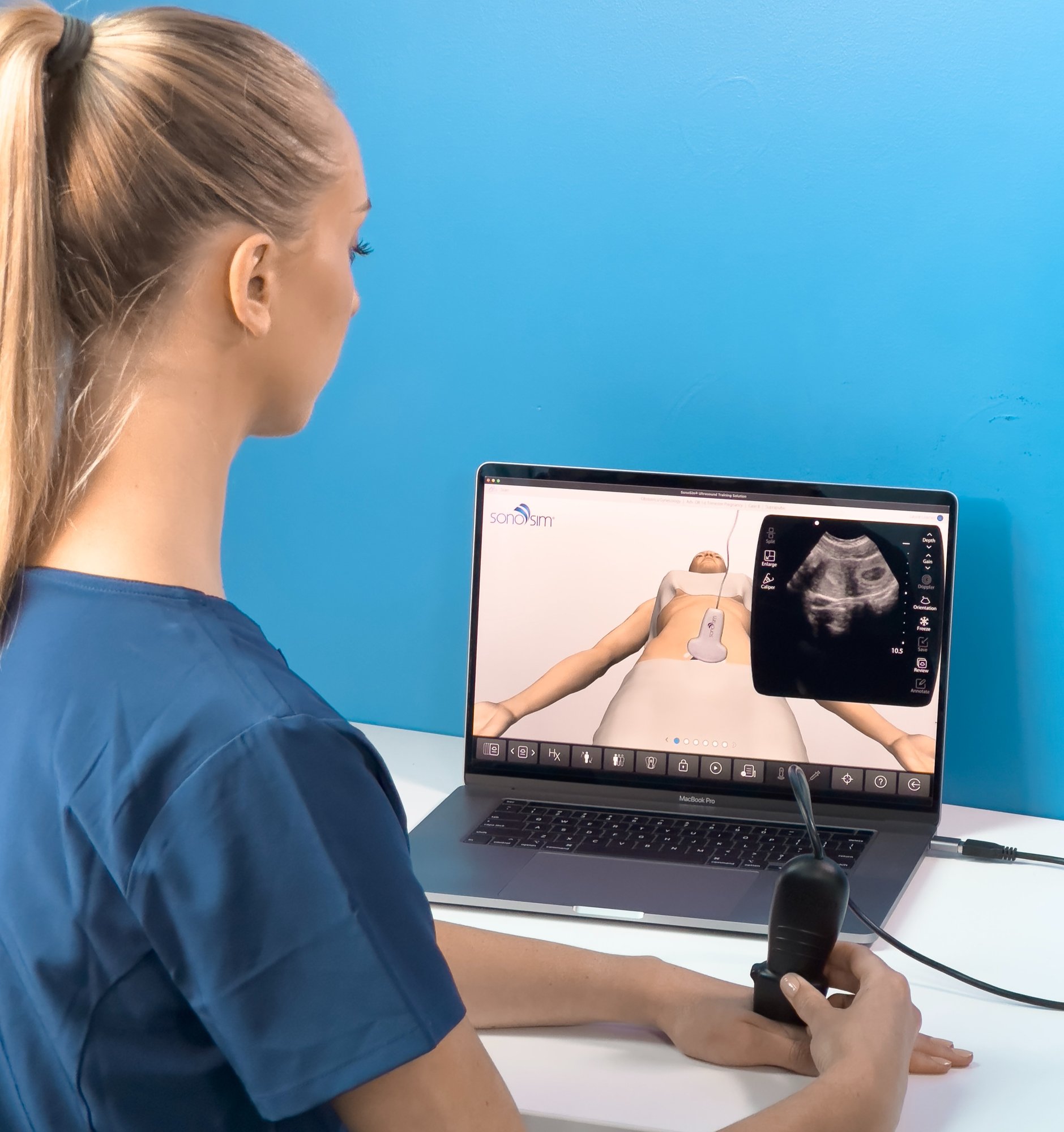



Ultrasound Education Optimized for Busy Advanced Practice Provider (APP) Programs
Overcoming the Barriers to Ultrasound Training for PA & NP Programs
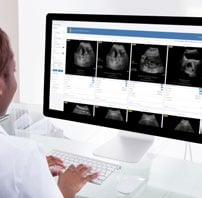
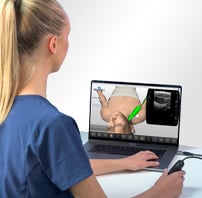
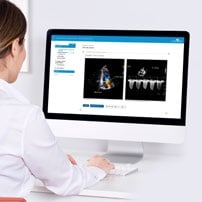
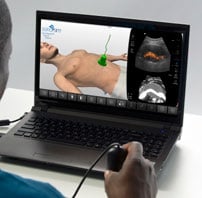
Physician assistant (PA) and nurse practitioner (NP) program ultrasound educators launching or expanding ultrasound training are faced with significant challenges. The SonoSim ecosystem provides educators with all the necessary tools to overcome these challenges and gives each learner a personalized ultrasound education pathway toward competency. With our wide array of content, covering the needs of all specialties, PA & NP programs can quickly and easily implement point-of-care ultrasound (POCUS) education and support clinical scanning with self-paced, remote training on learners’ laptops. And for group learning, there’s SonoSim LiveScan® to help you teach the integration of ultrasound into clinical decision-making by converting live volunteers or existing manikins into simulated patients with real pathology.
A POCUS Education Ecosystem for Every Program
Supporting PA & NP Programs Across Specialties
SonoSim was developed to uniquely support the POCUS education needs of PA and NP programs. Our fully customizable ecosystem allows program leadership and faculty to easily implement an ultrasound curriculum, support learner development outside of clinical rotations, and track progress over time. As we have grown, our content has been expanded and mapped to a variety of guidelines and requirements across specialties and allied health education, including physician assistant and nurse practitioner programs. The proven SonoSim Ultrasound Learning & Teaching Ecosystem combines online didactics, hands-on scanning, study tools, and assessment capabilities to provide a turn-key solution for PA and NP programs. Program directors and ultrasound curriculum leads can use SonoSim to standardize ultrasound education and be confident that learners are progressing toward competency metrics. The dynamic and flexible SonoSim ecosystem supports evolving curriculum needs as programs grow, training standards are defined, and higher levels of ultrasound competency are required.
Proven & Validated SonoSim Ultrasound Education Ecosystem
Used by 120K+ Learners & 2,000 Institutions. Reviewed in 50+ Peer-Reviewed Publications.

Equally effective as live instruction in ultrasound image acquisition training

More effective than live instruction in ultrasound image interpretation training

Able to uniformly train & assess any number of learners
Virtual Ultrasound Training
All Levels & Specialties • Created by Leading Ultrasound Educators
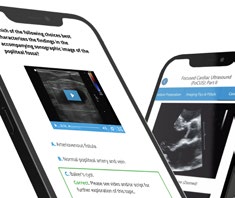
Ideally suited for the busy schedules of PA and NP learners, SonoSim’s 85+ ultrasound courses cover a wide array of POCUS topics for all learner levels.
-
Anatomy & Physiology
-
Core Clinical
-
Advanced Clinical
-
U/S-Guided Procedures
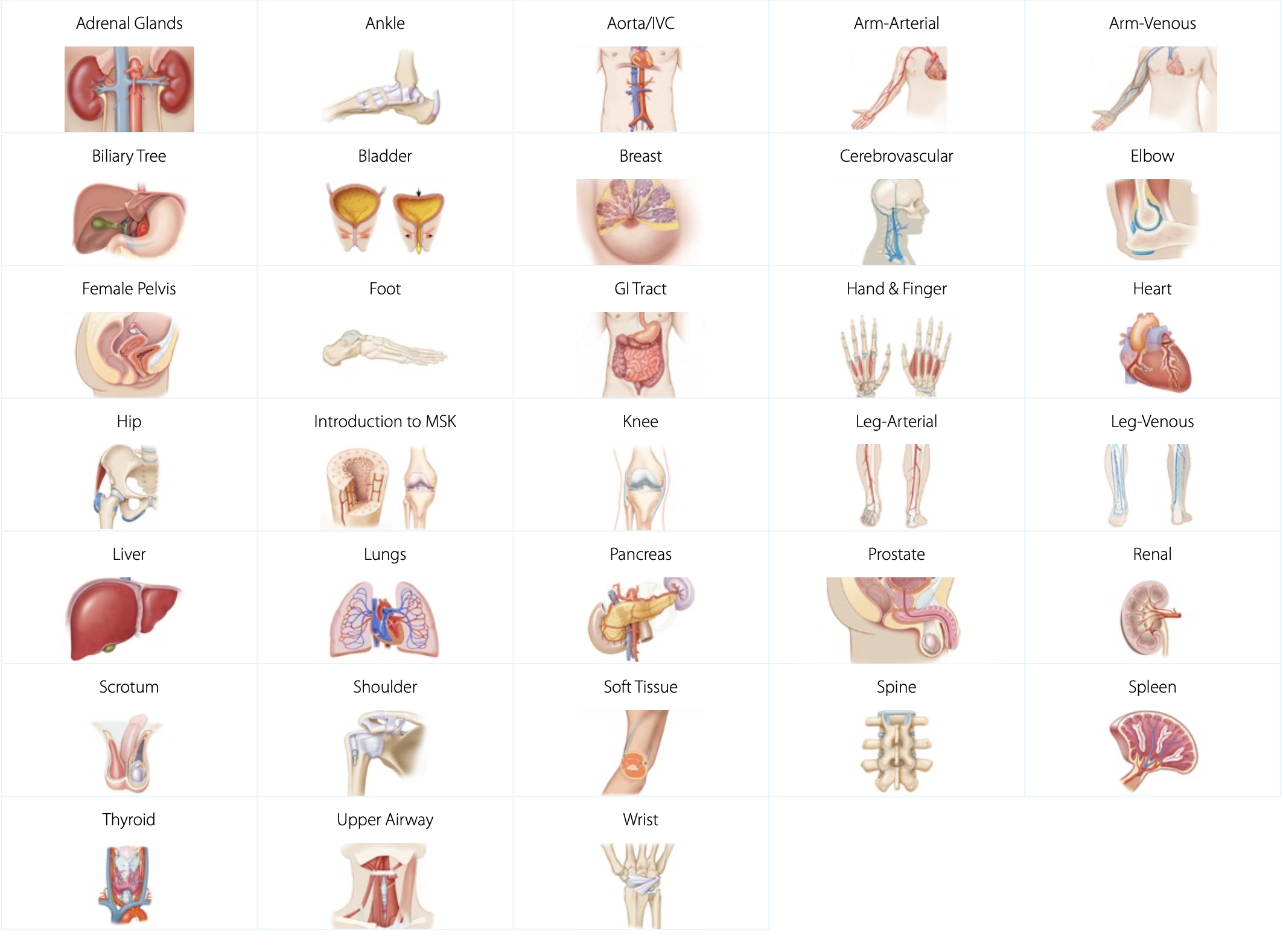
Anatomy & Physiology
SonoSim Anatomy & Physiology topics provide a strong foundation of ultrasound knowledge, specific to anatomical regions, organs, and structures. Developed by ultrasound experts, SonoSim training covers regional anatomy & physiology, sonographic anatomy, scanning techniques, and imaging tips & pitfalls. Each topic comes with several scanning cases that are accessed in the SonoSimulator to reinforce learning from the courses with hands-on scanning on real patient ultrasound imagery.
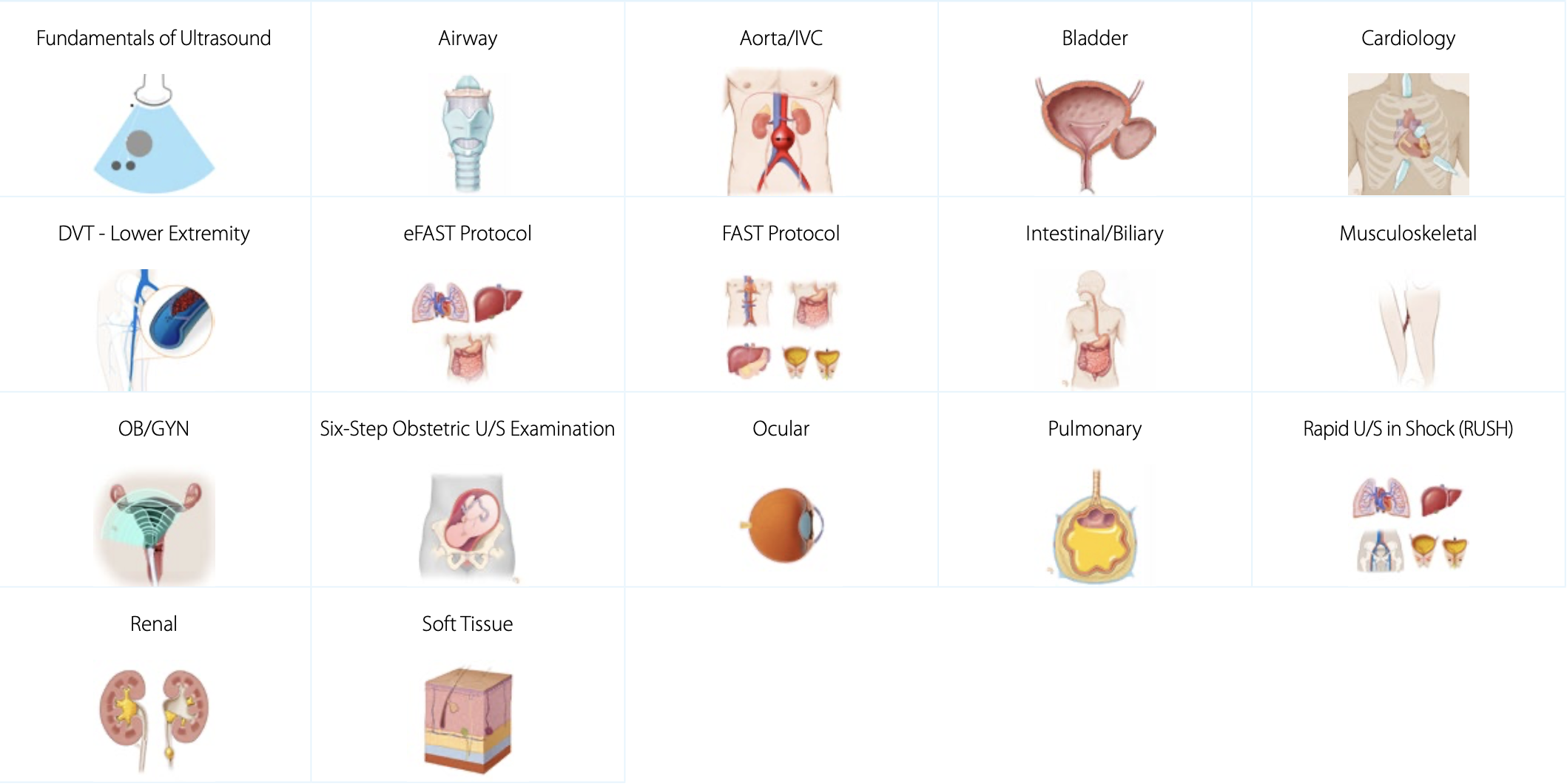
Core Clinical Ultrasound Courses
Our Core Clinical Ultrasound Courses provide an in-depth understanding of the components required to accurately assess and diagnose using ultrasound. Exam indications, regional anatomy, sonographic anatomy, and sonographic technique are covered. There is a focus on pathologic case studies and imaging tips & pitfalls. These courses are ideally suited to prepare your point-of-care ultrasound (POCUS) learners for simulation scenarios.
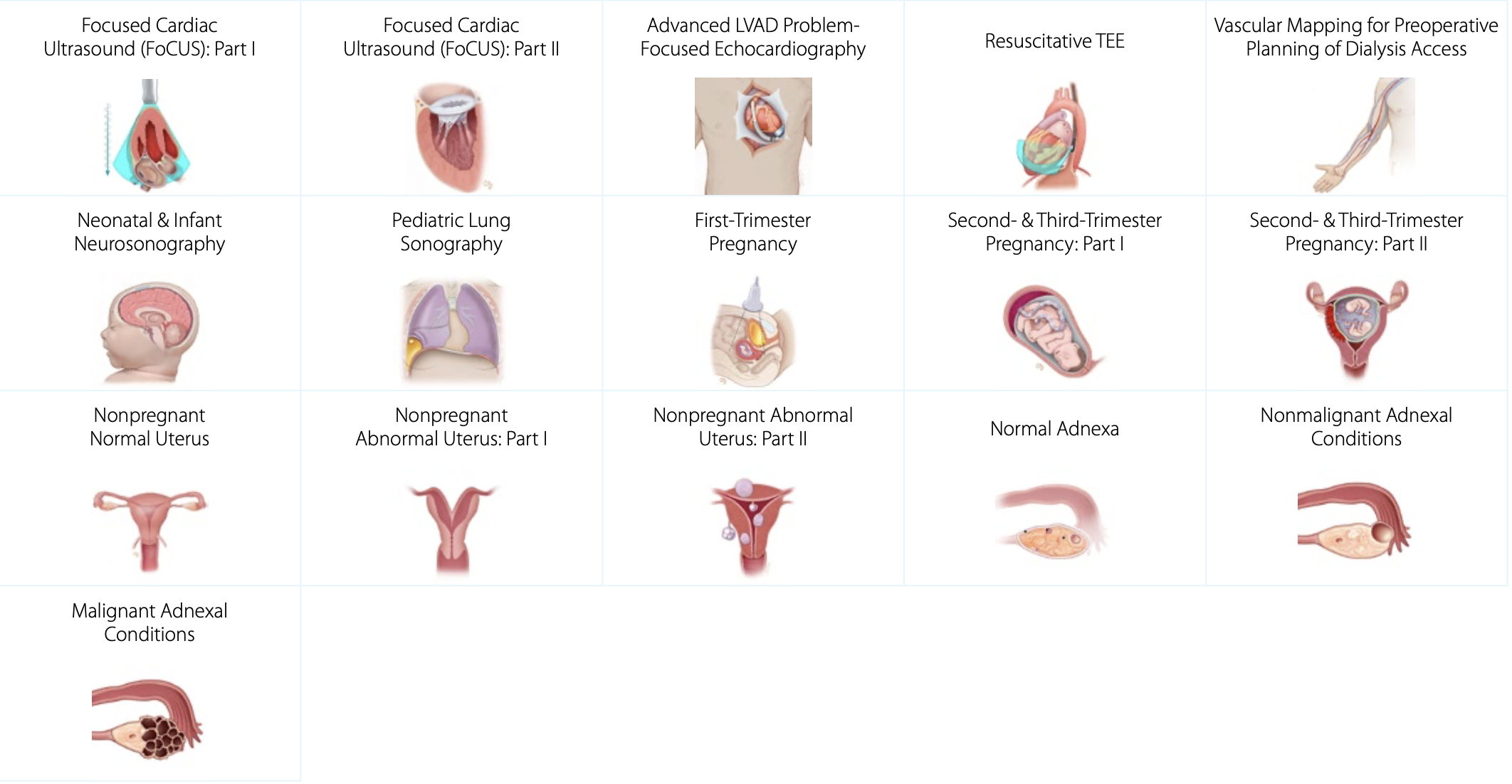
Advanced Clinical Ultrasound Courses
SonoSim Advanced Clinical Ultrasound Courses cover complex diagnoses and sonographic applications. With a focus on specific pathologic conditions, these advanced clinical and diagnostic ultrasound topics provide learners with a deep understanding of ultrasound techniques for evaluating various complex medical conditions.
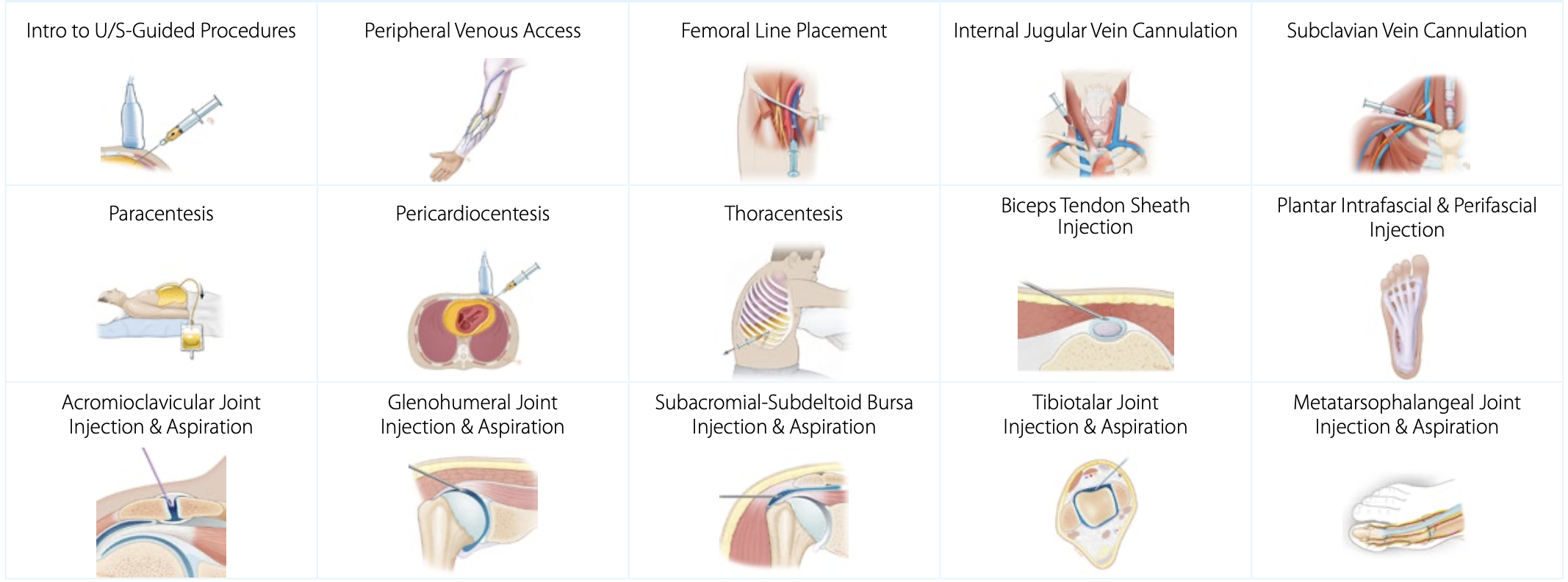
Ultrasound-Guided Procedure Courses
SonoSim ultrasound-guided procedure courses cover patient positioning, procedural steps, imaging adjuncts, potential complications, and more. Using real patient data sets that vary in body morphology, right versus left-sided approaches, and pathophysiologic states, SonoSim helps prepare learners for in-person Sim Center sessions using phantoms and ultrasound machines.
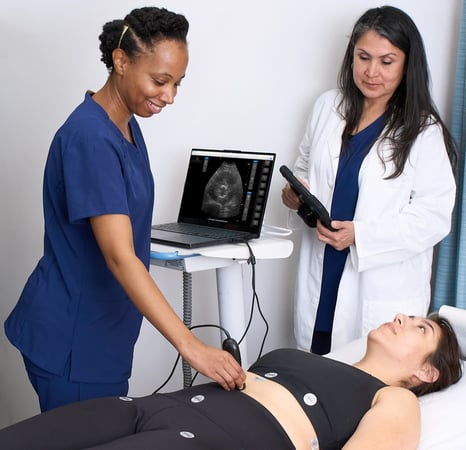
SonoSim LiveScan®
Bring Ultrasound Simulation to Life


- Conduct realistic, live simulations that teach the application of ultrasound in medical decision-making & assess how well it is applied.
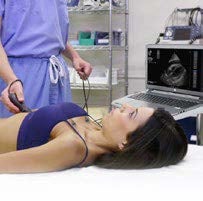
- Instantly transform any manikin or live volunteer into a “patient” with real pathology.
- Create additional realism by dynamically changing vital signs on-the-fly in response to learner decision-making based on ultrasound findings.
Unlock the Power of Ultrasound for your PA & NP Program
Learn how the SonoSim Ecosystem can help.
Aligned to Current Guidelines for PA & NP Education
SonoSim Content is Mapped to Guidelines & Updated Regularly
SonoSim content is mapped to current guidelines and updated regularly to support PA and NP programs with consistent, evidence-based ultrasound education across classroom learning, skills practice, and clinical rotations.
- Supports standardized curriculum delivery across cohorts
- Reinforces core POCUS applications commonly encountered during rotations
- Includes assessment tools to support competency-based progression
- Updated regularly to reflect evolving guidelines and best practices
Physician Assistant & Nurse Practitioner Programs
Mapped to AIUM Practice Parameters
Relevant SonoSim Content
|
|
|

The SonoSim Wave
An Ultrasound Insights Newsletter
Get the latest trends in ultrasound training, education, & applications delivered to your inbox.
1. Florescu CC, Mullen JA, Nguyen VM, et al. Evaluating didactic methods for training medical students in the use of bedside ultrasound for clinical practice at a faculty of medicine in Romania. J Ultrasound Med. 2015 Oct;34(10):1873-82. Epub 2015 Sep 11.
2. Brown B, Adhikari S, Marx J, et al. Introduction of ultrasound into gross anatomy curriculum: perceptions of medical students. J Emerg Med. 2012 Dec;43(6):1098-1102. Epub 2012 Mar 28.
3. Bell FE, Wilson LB, Hoppmann RA. Using ultrasound to teach medical students cardiac physiology. Adv Physiol Educ. 2015 Dec;39(4):392-396.
4. Hoppmann RA, Rao VV, Poston MB, et al. An integrated ultrasound curriculum (iUSC) for medical students: 4-year experience. Crit Ultrasound J. 2011 Apr;3(1):1-12. Epub 2011 Feb 1.
5. Paddock MT, Bailitz J, Horowitz R, et al. Disaster response team FAST skills training with a portable ultrasound simulator compared to traditional training: pilot study. West J Emerg Med. 2015 Mar;16(2):325-330.
6. Chung GKWK, Gyllenhammer RG, Baker EL, et al. Effects of simulation-based practice on focused assessment with sonography for trauma (FAST) window identification, acquisition, and diagnosis. Mil Med. 2013 Oct;178(10 Suppl):87-97.
7. Adhikari SR, Samsel K, Irving S, et al. Can ultrasound naïve first-year medical students develop hands-on skills in image acquisition after reviewing online ultrasound modules? Paper presented at: AIUM 2018. Proceedings of The American Institute of Ultrasound in Medicine Annual Convention; 2018 Mar 24-28; New York, New York.
8. Lewiss RE, Hayden GE, Murray A, et al. SonoGames: an innovative approach to emergency medicine resident ultrasound education. J Ultrasound Med. 2014 Oct;33(10):1843-1849.