2024
November 2024 - Movember Minute
The November 2024 issue of the SonoSim Wave explores ultrasound techniques in men's health.
Discover the November 2025 SonoSim Wave with Movember highlights, men’s health insights, and ultrasound education updates for instructors and clinicians.
.png?width=550&height=410&name=Scanning%20%26%20Imaging%20Tips%20(1).png)
Accurately measuring bladder volume before and after voiding is key when evaluating suspected urinary retention. Patients may present with suprapubic pain, low urine output, or a palpable lower abdominal mass. Even after voiding, it can be unclear whether the bladder emptied fully. Bedside ultrasound offers a quick, reliable way to assess post-void residual (PVR) volume.
An enlarged prostate can further obstruct outflow and increase PVR, making ultrasound assessment even more important.
How to Measure Bladder Volume
Example from training:
Pre-void volume measured about 20.2 cc.
After the patient attempted to void, repeating the same steps produced a post-void residual of about 12.2 cc.
Mastering this simple, standardized approach ensures consistent measurements and supports faster decisions when evaluating urinary retention.
Check out Bladder Core Clinical Ultrasound Training
🔑 SonoSim Members - Login to go to Bladder Core Clinical Ultrasound Training
Look below to see the turkey we hid in this ultrasound image.
.png?width=672&height=500&name=Scan%20%26%20Seek%20Answer%20(2).png)
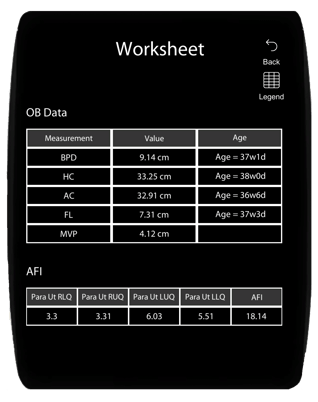 📝 Ultrasound worksheets are a great way to communicate key findings during an ultrasound exam, like measurements, abnormalities, and views obtained. Documenting on your worksheet can also give you time to review your images, ensuring proper documentation and that no required images are missed.
🔎 Why They Matter:
✅ Ensure no views or findings are missed📝 Standardize documentation across teams🧠 Help reinforce anatomical structures & pathological findings
Useful in clinical practice or as part of ultrasound training, especially in hands-on sessions or case reviews, worksheets can be a great resource in your ultrasound exam workflow.
.png?width=317&height=317&name=Ultrasound%20Memes%20(8).png)
IB: @laurenscansandreads
📲 Follow Us on Social!

.png?width=600&height=314&name=AUGUST%20AD%20(2).png)
The November 2024 issue of the SonoSim Wave explores ultrasound techniques in men's health.
Highlighting advancements in critical care ultrasound & ultrasound-guided procedures.
The March issue of The SonoSim Wave focuses on a wide array of women's health insights that support the use of ultrasound to improve patient care.